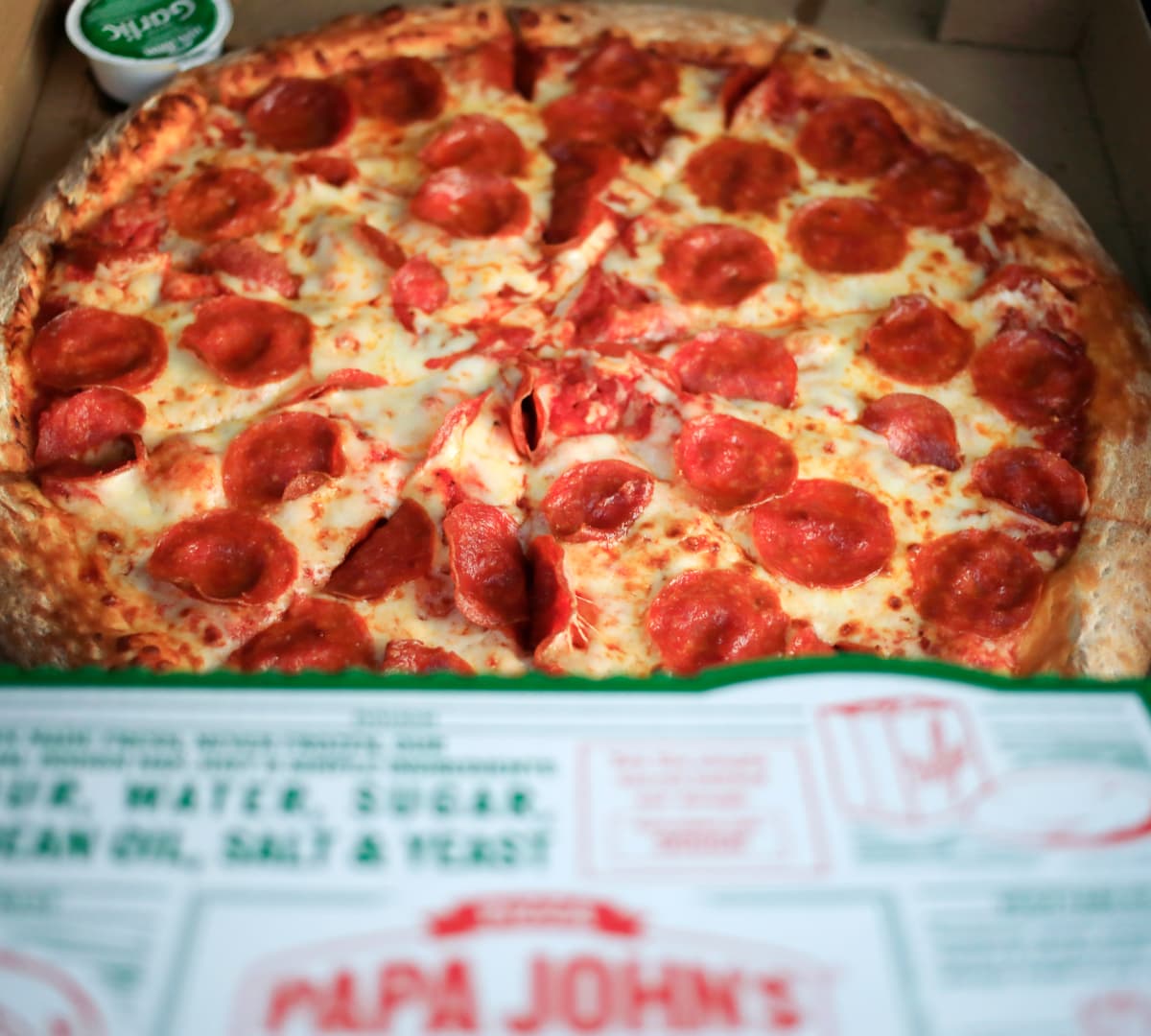
Pizza chains are facing multiple headwinds that have dimmed their growth prospects since the pandemic boom ended.
U.S. pizza restaurant sales fell 0.3% in 2025, according to Technomic data. Chain locations, which represent about two-thirds of domestic pizza sales, saw revenue shrink 0.3%. Papa Johns reported North American same-store sales declined 2.5% in 2025. Pizza Hut's U.S. same-store sales fell 5%. Domino's was the only major publicly traded chain to post U.S. same-store sales growth, with an increase of 3%.
More than 9,600 pizzerias have closed since August 2019, when pizza locations hit a peak of 83,035 nationwide, according to Datassential data.
Weaker consumer spending, expanded delivery options through third-party platforms like DoorDash and Uber Eats, and rising pizza prices are eroding demand. The average large cheese pizza now costs almost $17, according to the 2026 Pizza Power Report from PMQ Pizza. Frozen pizza retail sales rose 2.9% in the 52 weeks ended Nov. 7 compared with the same period in 2022, per NielsenIQ data.
GLP-1 medication use is also pressuring the category. Spending on pizza quick-service restaurants has fallen 22.2% per GLP-1 household after six to eight months using the medications, according to a 2026 PwC survey. Pizza's high carbohydrate and fat content makes it less appealing to consumers on these drugs.
Stock performance reflects the struggles. Papa Johns has lost about two-thirds of its value since March 2020. Domino's shares have gained only about 2% in that period, compared with the S&P 500's 150% climb. Yum Brands sold Pizza Hut this year to LongRange Capital and Yum China.
Chains are attempting to reverse course. Domino's launched a customizable Detroit-style personal pizza in August. Papa Johns unveiled a turnaround plan in November focused on food consistency and operations.