Monday's data from China tells a troubling story that markets have yet to fully reckon with: a nation caught between external price pressures and internal economic weakness. While the producer price index surged 5.7% year-on-year in October—accelerating from September's 5.0% and beating expectations for 5.3%—the consumer price index languished at just 0.7%, down from 0.9% and missing forecasts for 0.8%. This divergence is not merely a statistical curiosity; it reflects a fundamental imbalance in the world's second-largest economy that should concern global investors far more than Monday's modest currency movements suggest.
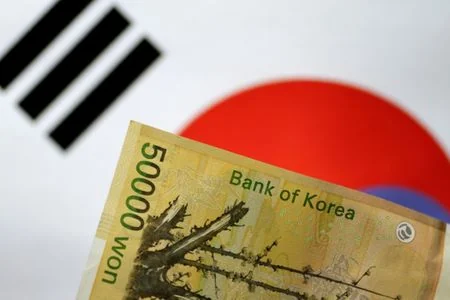
The culprits behind this split are revealing. Higher global energy costs and demand for AI-related electronics are fueling producer inflation, while falling food prices and subdued domestic demand continue to suppress consumer prices. Translation: Chinese producers are facing input cost pressures they cannot fully pass along to consumers. This compression of margins, combined with weak domestic demand, paints a picture of an economy struggling to sustain momentum. The modest gains across Asian currencies on Monday—the South Korean won leading with a 0.7% USD/KRW drop, the Japanese yen edging down 0.2%, and the Australian dollar rising 0.3%—reflect relief over U.S. dollar stabilization rather than confidence in regional economic fundamentals.
What makes this situation particularly precarious is the outlook offered by Capital Economics analysts, who expect the external price shock to persist over coming months but fade next year. Their forecast of producer prices returning to deflation and consumer inflation averaging just 0.4% in 2027 essentially admits that China faces years of tepid domestic demand ahead. This is not a temporary soft patch but a structural challenge requiring urgent policy attention.
Meanwhile, markets are distracted by U.S. employment data showing 165,000 jobs added in October—more than double economists' expectations—which sent the dollar rallying 0.7% on Friday for its biggest one-day advance in five months. This strength pushed the US Dollar Index to 102.181 by Monday morning and has markets pricing in nearly an 80% probability of a 25-basis-point Fed rate increase at its December meeting, up from around 71% a week earlier. With U.S. consumer price figures due Tuesday, the focus remains locked on Federal Reserve policy rather than the warning signs flashing from Beijing.
China's policymakers need to move beyond incremental measures. The current inflation dynamics—strong at the producer level, weak at the consumer level—suggest that traditional stimulus may prove insufficient. Without meaningful action to revive domestic demand and restore consumer confidence, China risks years of economic underperformance that could reverberate throughout global markets far more dramatically than Monday's currency fluctuations.