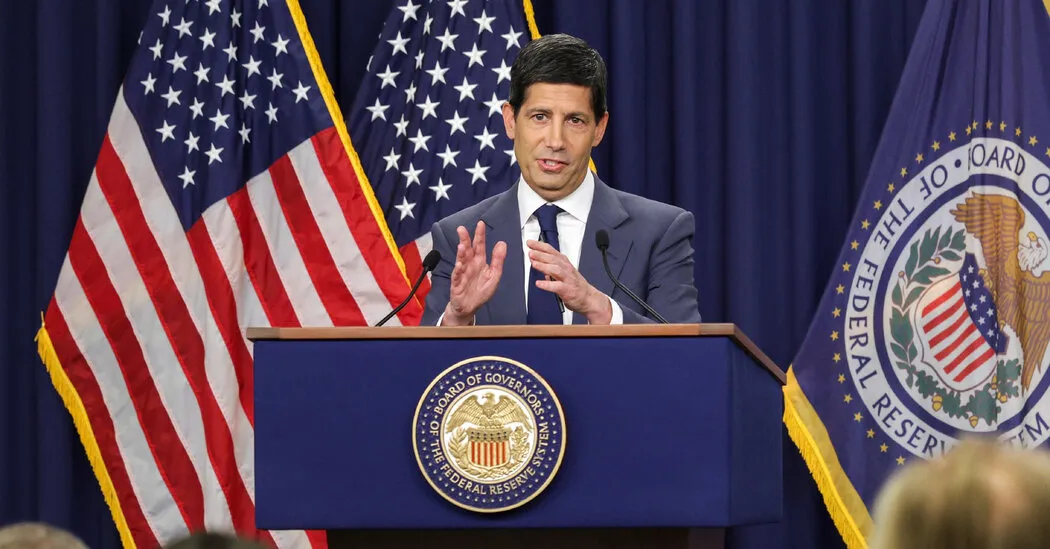
Kevin Warsh, the Federal Reserve chairman, held rates steady and announced the Fed will reduce the number of rate-setting meetings starting next year. In 2027, the Fed plans to hold seven policy meetings instead of eight, with one dedicated to "broad monetary policy strategy." In 2028, there will be six rate-setting meetings and two strategy meetings.
Warsh gave an upbeat assessment of the economy but stressed inflation remains too high. He said the Fed has flexibility to gather more information before deciding on rates because inflation expectations do not signal a lack of confidence in the Fed's 2 percent target and the economy shows no signs of overheating. He noted that credit conditions have tightened since September in ways consistent with the Fed's inflation goal.
Two officials dissented in favor of a quarter-point rate increase. Lisa D. Cook, a Fed governor, was among them. Cook is fighting to keep her job amid President Trump's campaign to remove her over alleged mortgage fraud allegations.
The S&P 500 ended 0.3 percent higher after volatile trading during Warsh's remarks. The two-year Treasury yield fell to 4.71 percent while the 10-year Treasury yield rose to 5.04 percent. The rise in the 10-year was driven by an increase in the breakeven inflation rate, a market measure of inflation expectations. George Goncalves, head of U.S. macro strategy at MUFG Securities, said the move signals doubt about the Fed's commitment to fighting inflation.
Warsh rejected the idea that the economy is running too hot and said productivity growth is picking up, allowing faster economic expansion without inflation. He stated politics played no role in the Fed's decision to hold rates steady days before the midterms.