# Fed Expected to Hold Rates Steady, But Warsh Signals Potential Path to More Hikes
The Federal Reserve will almost certainly hold the benchmark federal funds rate unchanged at its upcoming policy meeting, with futures markets pricing in near-zero probability of a move. Markets have fully digested September's rate increase and now see the central bank in a holding pattern as it assesses inflation and economic data in real time.
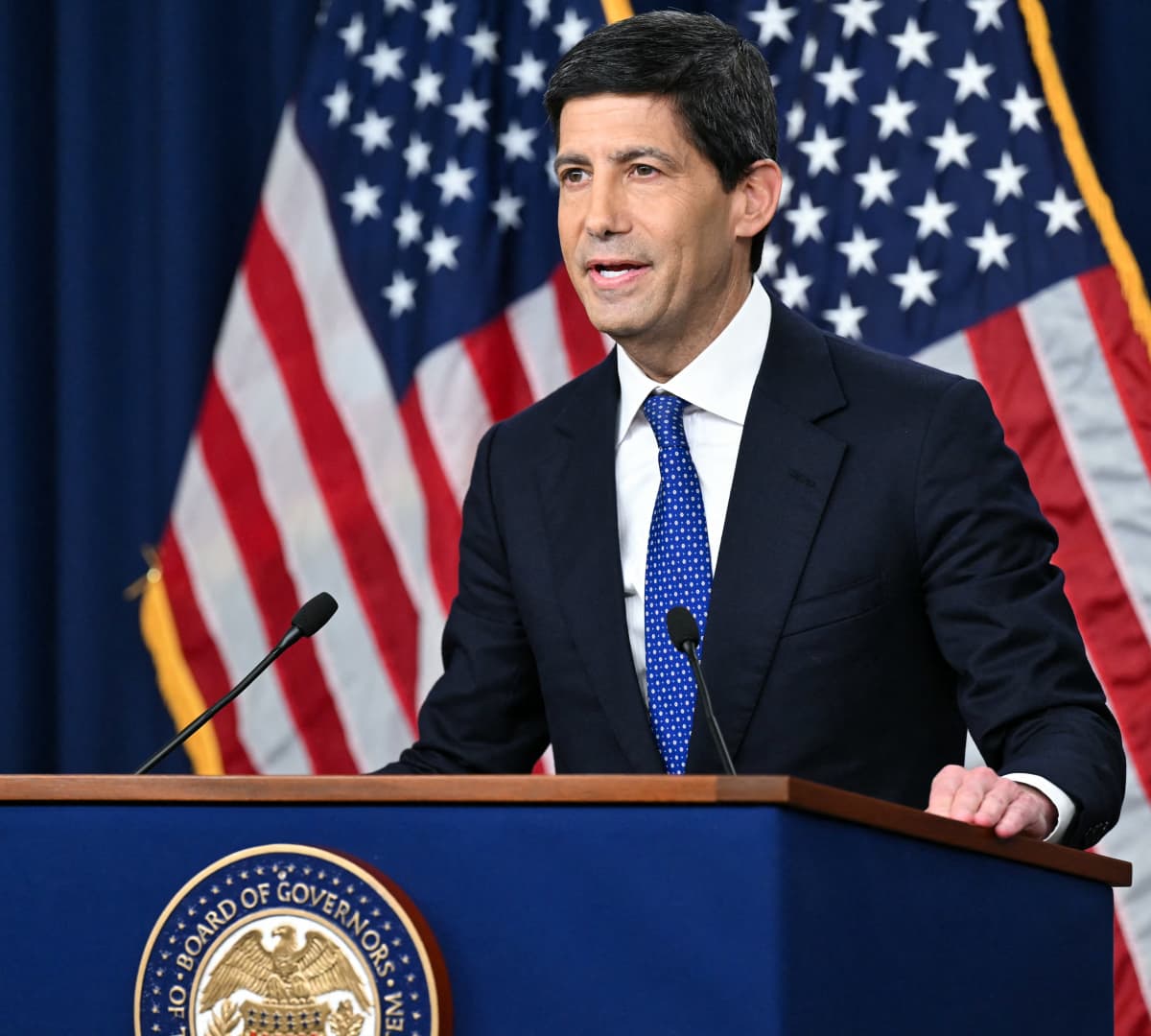
Yet the narrative may shift based on commentary from Christopher Warsh, the former Federal Reserve governor and current member of President Trump's economic team. Warsh has emerged as a influential voice in policy circles, and his recent public statements have suggested that additional rate hikes remain on the table despite mainstream market expectations favoring a pause or eventual rate cuts.
This divergence between market pricing and Warsh's dovish-skeptic stance creates a tension point for investors. The fed funds futures market currently reflects only a small probability of rate increases beyond the September hike. However, Warsh's positions carry weight among policymakers and could signal shifting preferences within the broader policy establishment. His advocacy for maintaining higher rates longer, paired with fresh inflation data or labor market reports, could accelerate a repricing of rate expectations.
The stakes matter enormously for equities, fixed income, and currency markets. Higher-for-longer rate scenarios benefit bond investors and the U.S. dollar while pressuring stock valuations, particularly in high-multiple growth sectors. The technology-heavy Nasdaq has already priced in substantial rate cuts by late 2024 or 2025. A scenario where Warsh's view gains traction would upend those assumptions and trigger sharp repricing downward in equities most sensitive to borrowing costs.
The Fed faces a genuine dilemma. Inflation remains above the central bank's 2 percent target, though it has cooled from 2022 peaks. The labor market shows resilience but not overheating. Energy prices fluctuate based on geopolitical factors beyond the Fed's control. Jerome Powell, the Fed chair, has emphasized data dependence, meaning upcoming employment reports, consumer price data, and purchasing managers' indices will drive the next move.
Warsh's intervention adds a political dimension. His alignment with the Trump orbit signals that voices outside the traditional Fed consensus want to ensure inflation stays suppressed even if it means extended monetary tightness. This contrasts with market participants who have grown comfortable assuming Powell will eventually cut rates to support growth and asset prices.
Watch for Warsh's exact language at upcoming forums or in media appearances. Phrases emphasizing "persistence" of inflation or the risks of "prematurely" easing policy hint at support for higher rates deeper into the future. Similarly, watch the Fed's own dot plot projections and Powell's press conference rhetoric at the next meeting for any shift in tone away from a pause mindset toward conditional optionality on future hikes.
The three-month Treasury yield, two-year Treasury yield, and the DXY U.S. Dollar Index react most directly to shifts in rate expectations, while the Nasdaq-100 (QQQ) and S&P 500 (SPY) show the equity impact. Investors should monitor the next jobs report and consumer price index print to see whether Warsh's inflation hawk stance gains empirical support.