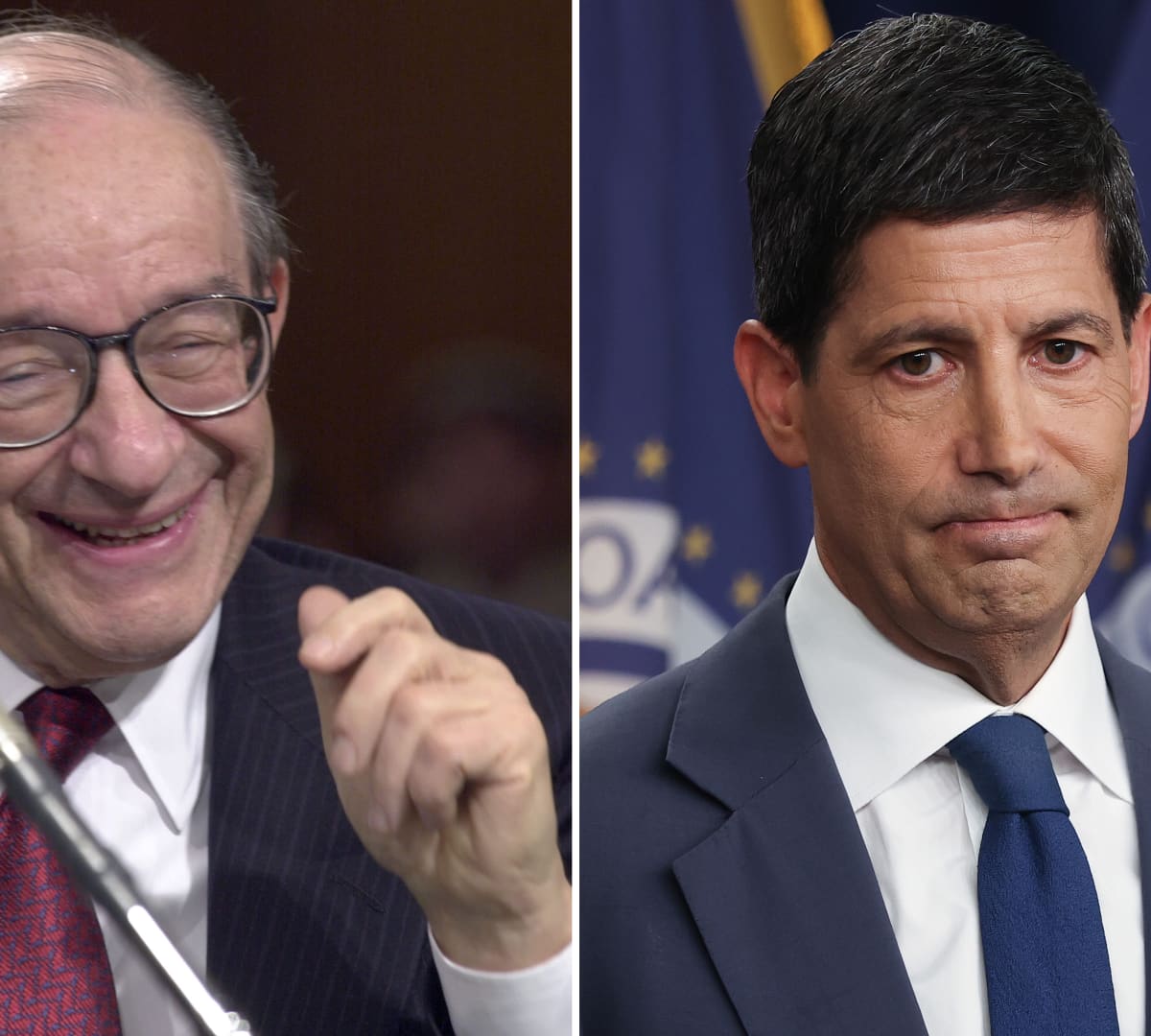
Kevin Warsh, the Federal Reserve chairman, faces a different inflation backdrop than Alan Greenspan did during the dot-com era, limiting his ability to hold rates steady while awaiting productivity gains from artificial intelligence, according to a CNBC Halftime Report discussion Wednesday.
Greenspan held the line on interest rates in 1995 and 1996 amid strong growth because he believed in the productivity promise of the internet revolution. He resisted inflation hawks on his committee during that period.
Warsh cannot follow the same playbook, the discussion concluded. The current AI build-out differs from the dot-com era in three key ways: the inflation environment, the magnitude of the capital-investment boom, and the monetary and fiscal stimulus already supporting the economy.
The magnitude of AI-related capex spending may eventually deliver productivity gains and lower inflation. However, the initial build-out phase is proving inflationary and straining a Fed already managing high inflation. This inverts Greenspan's situation, which did not face that front-end inflationary pressure.
The Fed appears likely to need to raise rates, possibly substantially, to reach conditions comparable to those Greenspan faced at the start of a major technological shift.