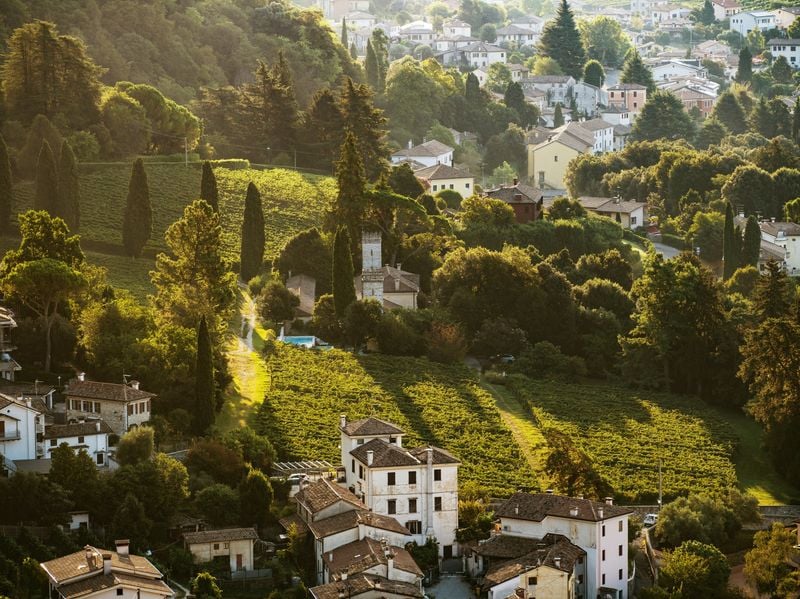
The Conegliano Valdobbiadene Prosecco region in northeastern Italy maintained harvest levels despite one of its hottest growing seasons on record, offering a model for how wine producers can adapt to climate pressure. Production exceeded 70 million bottles in the first nine months of 2026, less than 1% below 2025 and around 7% above the decade average, according to consortium documents.
The region experienced extreme heat this summer, including 60 nights when temperatures stayed above 20 degrees Celsius and four nights above 23 degrees Celsius, along with drought and daytime temperatures several degrees above historical norms. The growing cycle shortened by as much as 16 days over two decades, with harvest beginning about 10 days earlier than the historical average. By September 15, 90% of the harvest was complete.
Research commissioned by the Prosecco Conegliano Valdobbiadene DOCG consortium and conducted by the University of Cantabria modeled climate indicators including temperature, humidity and rainfall. Consortium director Diego Tomasi said this summer's growing conditions resembled those models projected for around 2045.
Growers changed vineyard management practices to cope. They now leave more foliage around grape bunches to shield them from afternoon sun, reversing traditional practices aimed at maximizing sunlight. Water management has become central as rainfall arrives in shorter, intense bursts. Producers are increasing soil organic matter to retain moisture and studying reservoirs to store water. DOCG rules prohibit irrigation for boosting production but allow emergency irrigation, which this year extended to mature vineyards alongside young ones.
Primo Franco of the Nino Franco winery said he long opposed irrigation but was forced to change. Franco Adami, another producer, said growers spent weeks hauling pipes across steep hillsides to reach stressed vineyards. Production costs on the precipitous hillsides, where most work is done by hand, are already among the highest in Italy and adaptation will likely increase them further.
Researchers noted that warmer temperatures accelerated sugar accumulation and reduced acidity, particularly malic acid. Franco and Adami reported higher pH levels and declining malic acid this year but said quality remained high. This contrasts with Champagne, where the 2026 harvest is forecast to fall 38% from 2025 due to frost, hail, drought and heatwaves, according to France's farm ministry.
The consortium sold around 98 million bottles in 2025, up 8% from 2024. Prosecco accounts for 78% of Italian sparkling wine exports by value. Italian sparkling wine exports declined just 1.6% in the first half of 2026 compared to a year earlier, while still Italian wine exports fell 9.1% by value.
Tomasi said growers face continued investment needs in water management, vineyard practices and infrastructure as climate change becomes the present condition rather than a future prospect.