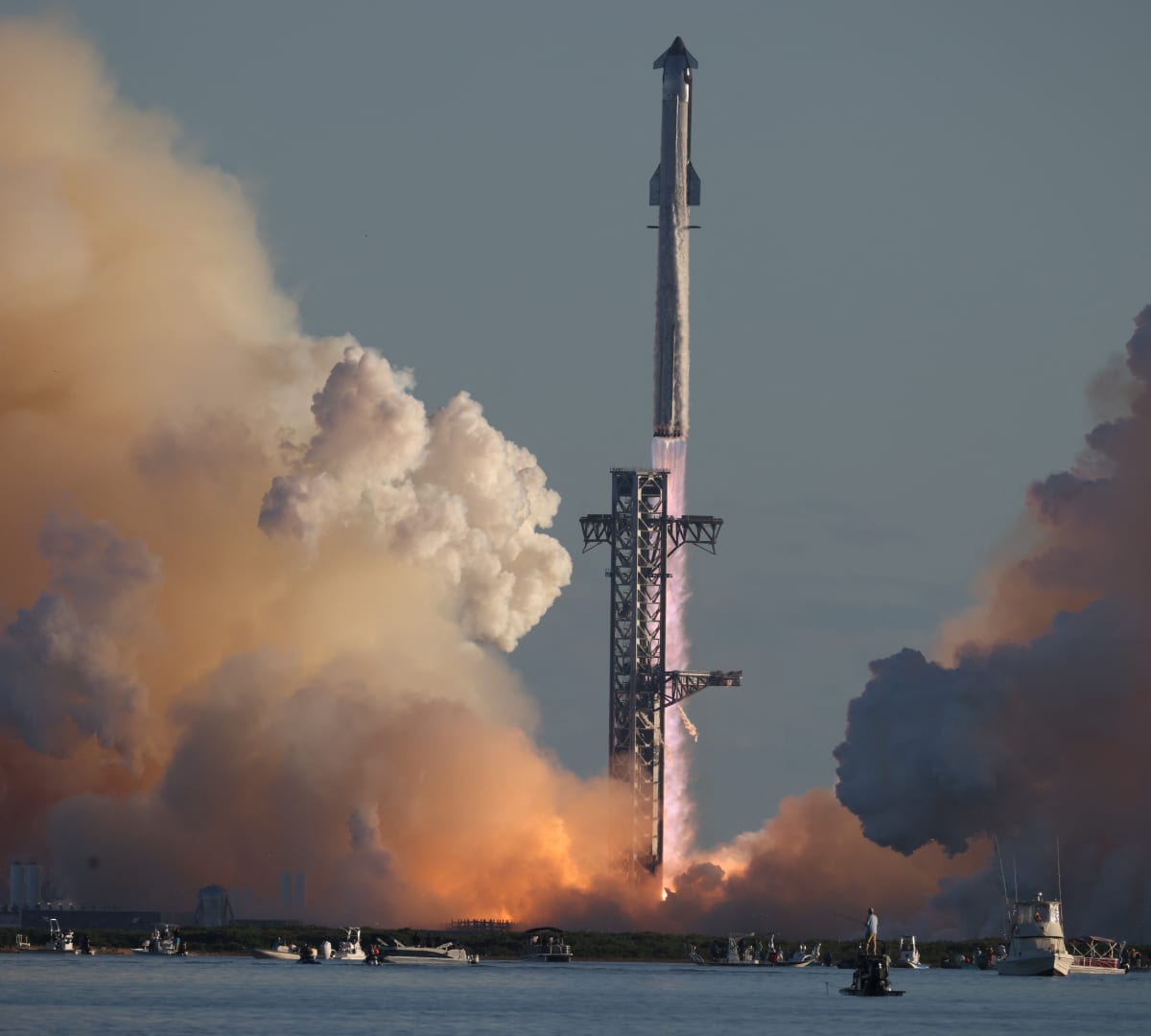
SpaceX launched Starship in Test Flight 15 on Friday at 4:47 p.m. local time from its South Texas facility. The company failed to recover the booster, diverting it to splash into the Gulf of Mexico where it burst into flames. This was the first Starship mission to attempt catching both the booster and upper stage.
The upper stage continued into orbit after the booster catch failed. SpaceX expects the upper stage to complete fourteen orbits around Earth, with plans to land it back at Starbase on Saturday. The company deployed 26 Starlink v3 satellites during Friday's flight, matching the deployment from the previous test flight.
SpaceX obtained FAA authorization before launch. The FAA later issued a nationwide ground stop due to communication problems at multiple air traffic control centers, but the SpaceX license was not affected by the stoppage.
William Blair analysts wrote that SpaceX is "likely a full decade ahead of peers on this front" when it comes to launches, and that a delay of a few months due to an unsuccessful catch would not be consequential.
SpaceX faces criticism over restrictions on its Starshield satellite service in Ukraine. Ukraine President Volodymyr Zelenskyy said military forces experienced limits on Starshield without warning, harming their ability to defend against Russian aerial attacks. Similar limits were temporarily imposed last month. Some U.S. senators have condemned the restrictions and urged Congress to investigate SpaceX.