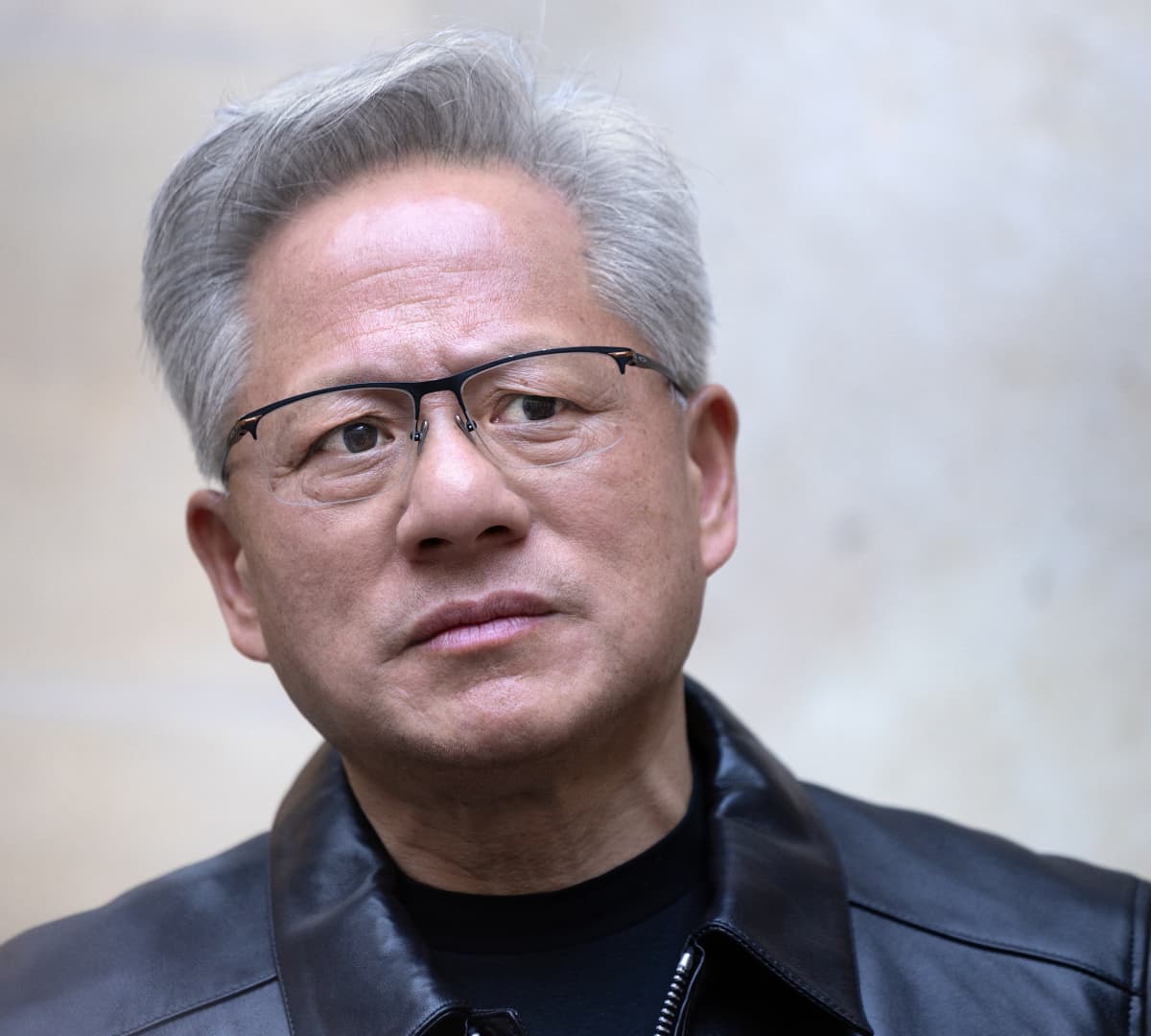
Jensen Huang resigned as Nvidia CEO on Thursday following reports of affairs with multiple company employees, including an executive in a Singapore-based cloud computing firm suspected by U.S. intelligence of spying for China. Colette Kress, Nvidia's longtime CFO, was named interim CEO.
Nvidia shares fell more than 4% on Thursday, with intraday losses exceeding 14%. Year-to-date, the stock is down 12%.
CNBC's Jim Cramer said Huang's departure was necessary to protect Nvidia from fallout and that the company betrayed shareholders. Cramer praised Kress's deep understanding of Nvidia's operations and financials, positioning her to provide stability during ongoing investigations into Huang's conduct and possible violations of U.S. chip export restrictions.
Cramer argued that Nvidia's future does not depend on Huang. "There won't be a better Nvidia, just a different one [without Huang]," Cramer said, envisioning a company that is better organized and more disciplined about investments.
Under Huang, Nvidia built an equity investment portfolio including a $5 billion investment in Intel in 2025 and a $2 billion investment in AI cloud provider CoreWeave. Cramer suggested that new leadership could pursue more disciplined capital allocation and potentially return proceeds to shareholders through larger buybacks.
Cramer noted Nvidia's underlying business remains strong, with substantial cash reserves and expectations for robust earnings Tuesday evening. But he cautioned that strong quarterly results might not reassure investors amid lingering uncertainty.
Investigations into Huang's conduct could result in sanctions affecting Nvidia's international business. Competitors including Advanced Micro Devices are advancing their AI chips. AMD shares surged almost 6% on Thursday, extending a five-session winning streak.
On Tuesday, Cramer's Charitable Trust downgraded Nvidia to hold-equivalent rating. He urged longtime shareholders to consider taking profits rather than losing gains if the stock falls further. He also cautioned against abandoning Nvidia, citing its engineering expertise and multiyear product roadmap.