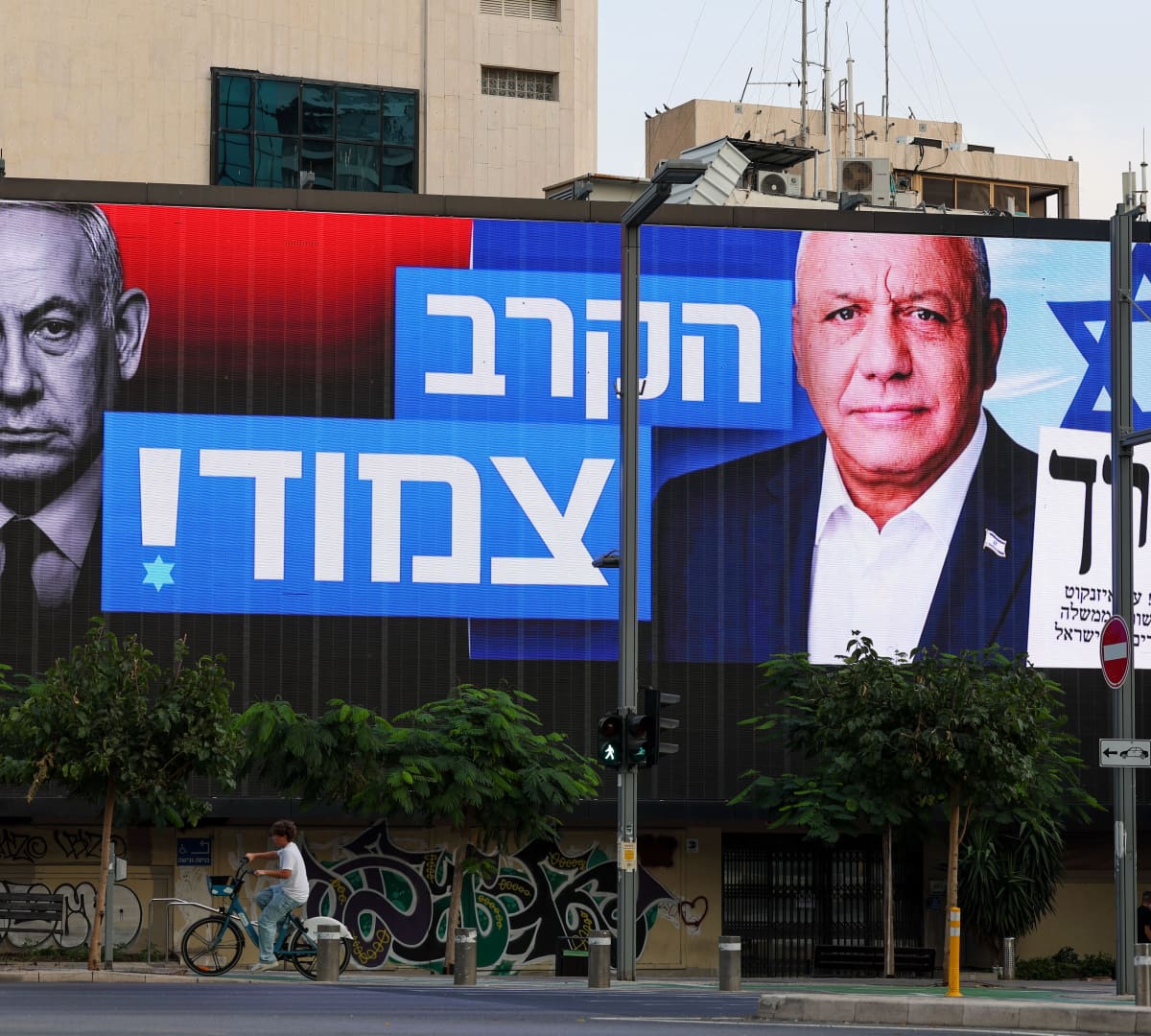
Israeli assets declined Wednesday after elections produced no clear winner, with neither Prime Minister Benjamin Netanyahu's bloc nor challenger Gadi Eisenkot's bloc securing the 61 Knesset seats needed to form a government.
With more than 80% of votes counted, Netanyahu's bloc held a narrow lead of around 54 seats versus Eisenkot's 49 seats. Arab-led parties, belonging to neither camp, earned about 18 seats. Official results will be published Nov. 4. Turnout reached 77.7%, the highest in a Knesset election in 27 years.
The Israeli shekel fell 2% against the U.S. dollar. The Tel Aviv 35 stock index traded 2.3% lower. Israeli government bond yields rose across the curve. The 2-year bond yield added 6 basis points while the benchmark 10-year yield rose 8 basis points. The 30-year yield gained 6 basis points.
Eisenkot, a former military chief of staff, declared victory based on preliminary results and claimed the first right to form a government. "The initial exit poll results indicate a complete lack of confidence in Netanyahu and his October 7 government," he said on X.
Coalition formation typically requires negotiations. The president asks a Knesset member best positioned to assemble 61 seats to attempt government formation. If those efforts fail, another election can be called.
Arab-party positioning may prove decisive. Ra'am leader Mansour Abbas said "our vote will change the government." The pro-Palestinian stance of Arab-led parties aligns them more closely with Eisenkot than Netanyahu, though neither has committed to including them. Yisrael Beytenu leader Avigdor Liberman, projected at seven to nine seats in Eisenkot's bloc, refused during campaigning to rely on Arab parties.
Investors monitoring the shekel, Tel Aviv 35, and Israeli government bonds should watch coalition negotiations over the coming weeks, as the formation timeline and composition of the next government will determine near-term policy direction.