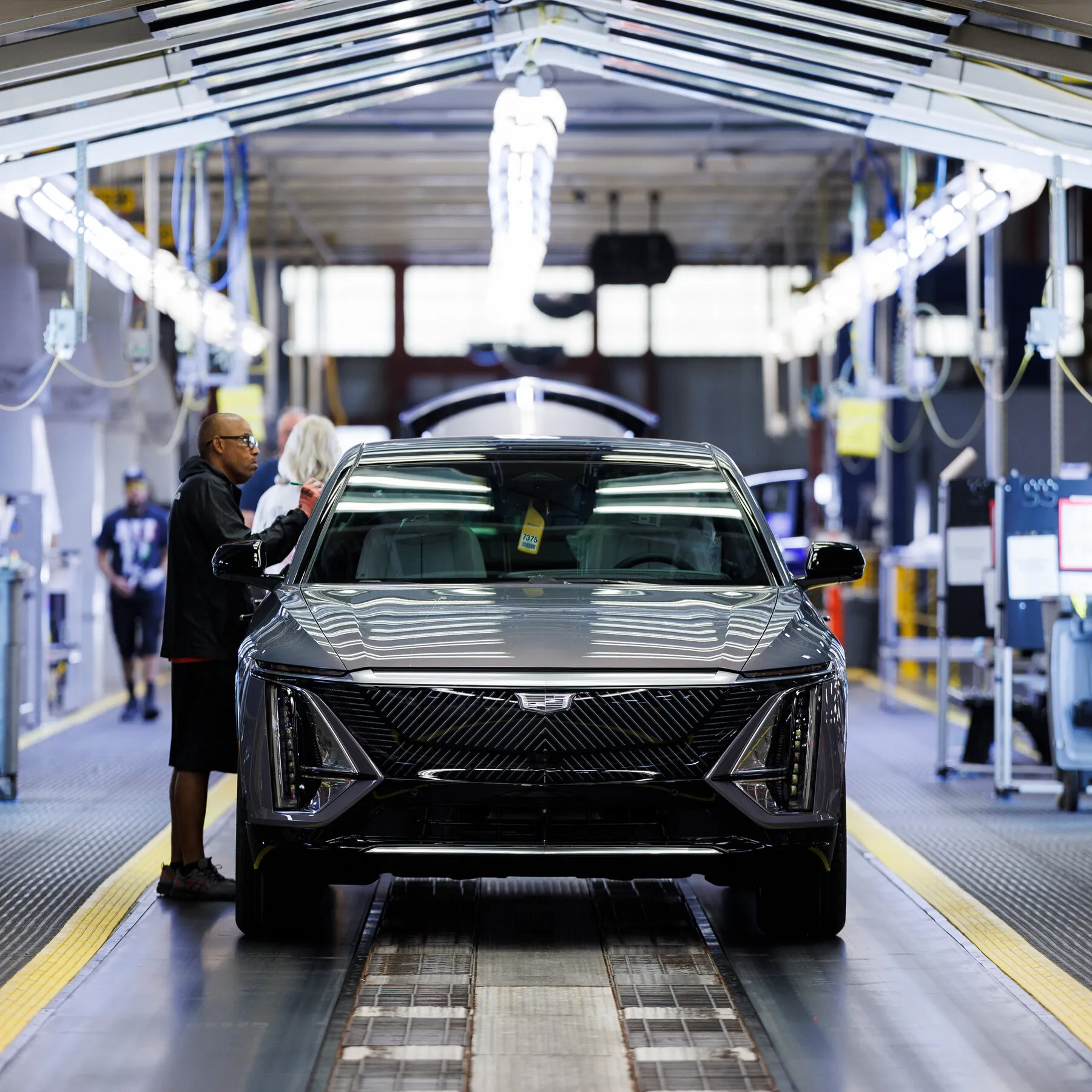
General Motors is ending its century-plus tenure on the New York Stock Exchange and relocating to the Nasdaq, marking a watershed moment for one of Detroit's oldest industrial giants. The move reflects a strategic pivot away from the traditional industrial exchange toward a market dominated by technology and growth-focused companies.
GM will transfer its listing from the NYSE to the Nasdaq effective immediately upon completion of all regulatory filings and approvals. The company trades under the ticker symbol GM, which will continue after the migration. This represents a deliberate repositioning that signals GM's transformation from a legacy automaker into an electrified and autonomous vehicle manufacturer.
The NYSE has long served as the home for blue-chip industrials and traditional Fortune 500 companies. By contrast, the Nasdaq hosts Tesla, Nvidia, Apple, and other technology innovators that investors associate with forward-looking industries and elevated growth trajectories. The shift matters because listing venue influences investor perception, trading dynamics, and the types of institutional capital that monitor a stock.
GM has invested heavily in electric vehicle development and software capabilities over the past five years. The company launched the Ultium battery platform, established partnerships with LG Energy Solution and Samsung SDI, and created Cruise, its autonomous vehicle unit now operating robotaxi pilots in San Francisco and Phoenix. Management views the Nasdaq listing as an alignment with the company's redefined identity in the EV and autonomous driving space rather than traditional automotive manufacturing.
From a trading perspective, the Nasdaq operates on an all-electronic system with higher liquidity volumes in many large-cap stocks. The exchange attracts algorithmic traders, venture capital firms, and growth-focused asset managers who may have previously overlooked GM as a stagnant industrial stock. Higher trading volume can tighten bid-ask spreads and reduce transaction costs for institutional investors accumulating positions.
The migration also carries symbolic weight in capital markets. When a company leaves the NYSE after 100-plus years, it signals management's confidence in a new strategic direction. Investors interpret such moves as bullish indicators that leadership believes the company's future lies in growth narratives rather than stable dividend-paying industrial operations. However, this narrative shift places pressure on GM to deliver measurable progress in EV adoption and autonomous driving commercialization.
GM's rivals face parallel pressures. Ford Motor Company and Stellantis remain on the NYSE, though both have aggressive EV roadmaps. Tesla, listed on the Nasdaq, has commanded a valuation multiple far exceeding legacy automakers despite lower production volumes, because investors price in autonomous and software revenue potential. GM's listing change positions the company to compete for investor attention alongside Tesla and EV-pure-plays like Rivian and Lucid Motors.
Regulatory approval for the listing transfer requires SEC clearance and filing confirmations with both exchanges. Once completed, GM shares will trade under the symbol GM on the Nasdaq instead of the NYSE. Investors holding GM positions need not take action; their shares automatically transfer to the new venue.
The listing migration represents GM's most visible attempt yet to rebrand itself as a technology-enabled mobility company rather than a traditional auto manufacturer. Success depends on actual delivery of EV profitability and autonomous driving traction, not exchange symbolism alone.