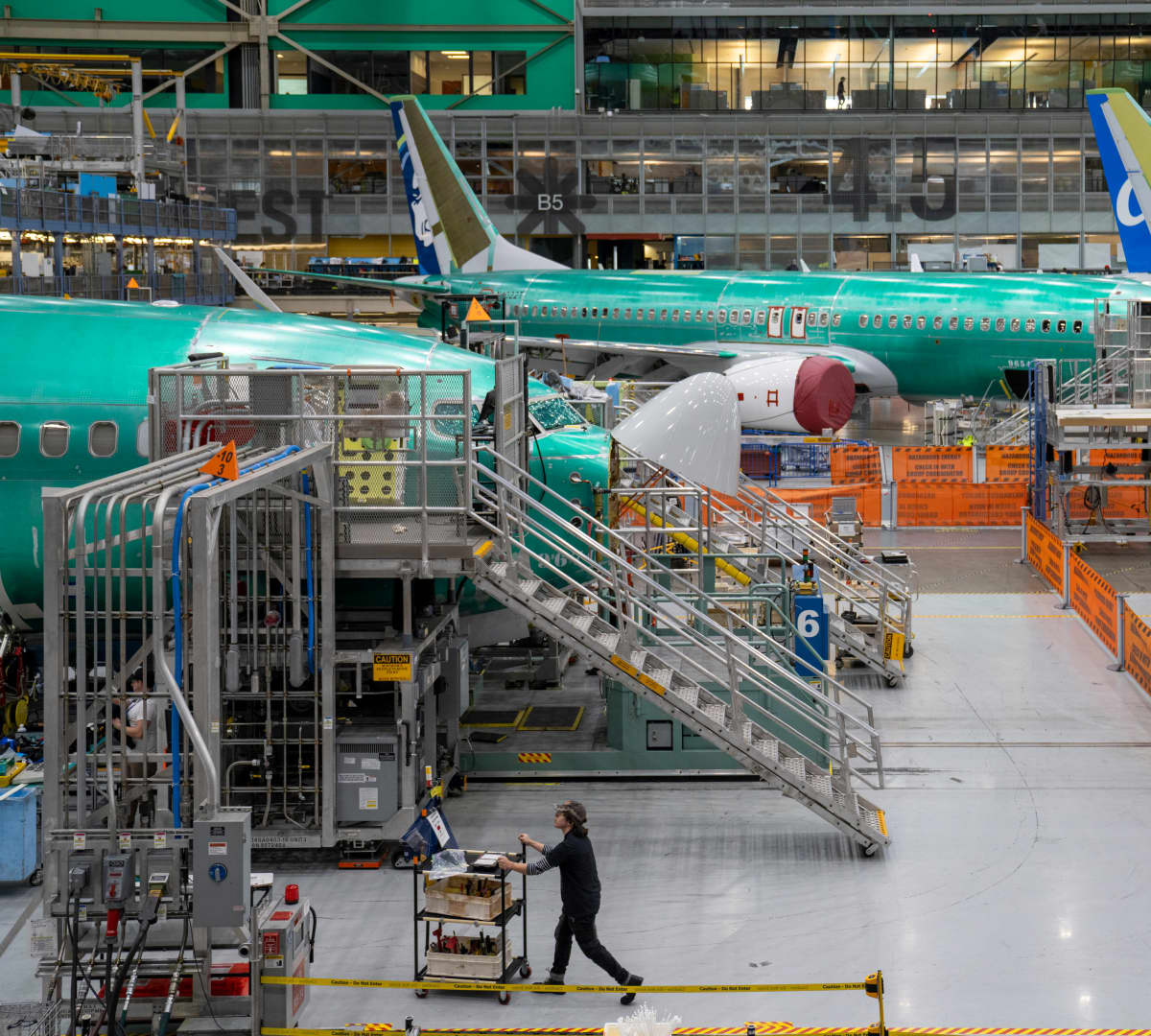
Boeing shares plummeted 9% on Monday as the aerospace manufacturer signaled a dramatic slowdown in its 737 Max production recovery timeline. The company disclosed it will not achieve significant production ramps until late 2027, pushing back investor expectations by roughly 12 months.
The announcement comes ahead of Boeing's quarterly earnings report, scheduled for Tuesday morning before market open. Executives will brief analysts on the aircraft production outlook during that call, but the production delay already moved markets. Boeing's stock dropped sharply on the revised guidance, reflecting investor disappointment with the extended timeline for returning to normal output levels.
This delay carries substantial weight for Boeing's financial trajectory. The 737 Max remains the company's highest-volume commercial aircraft and a critical revenue driver. Production constraints directly impact delivery schedules, cash flow, and the company's ability to offset recent operational challenges and supply chain disruptions. Investors had anticipated faster recovery following the MAX's return to service earlier this year after an extended grounding period.
Boeing faces a complex operational landscape. The company battles persistent supply chain bottlenecks, labor issues following recent union strikes, and increased manufacturing quality scrutiny. The Federal Aviation Administration maintains heightened oversight following safety incidents and quality control lapses discovered on 737 Max aircraft at various stages of assembly. These factors have constrained the company's ability to scale production quickly.
The late 2027 timeline suggests Boeing will operate well below pre-pandemic production rates for the next several years. Industry analysts estimate Boeing previously targeted 38 to 42 aircraft per month by mid-2025. Pushing significant ramps to late 2027 indicates monthly output will remain substantially lower, likely in the 20s to low 30s range through 2026 and early 2027.
This delay ripples through the aerospace supply chain. Tier-one suppliers including Spirit AeroSystems, Safran, and Collins Aerospace face reduced component demand. Airlines waiting for aircraft deliveries encounter extended delays in fleet modernization plans. Lessors holding MAX orders experience compressed lease revenue timelines.
The revised outlook also compounds Boeing's competitive disadvantage versus Airbus, which has ramped A320 family production more aggressively. Airbus announced monthly delivery rates approaching 75 aircraft by late 2024, widening the production gap between the two manufacturers. Boeing's constrained output allows Airbus to capture additional market share during the recovery period.
For Boeing's balance sheet, slower production means delayed cash receipts from aircraft deliveries. The company carries substantial debt and relies on aircraft delivery milestones to generate positive free cash flow. Production delays extend the timeline for achieving financial sustainability, potentially requiring continued debt refinancing or capital raises.
Boeing management will face tough questioning on Tuesday regarding the production outlook, facility readiness, labor availability, and supply chain recovery timing. Investors will demand clarity on what assumptions underpin the late 2027 timeline and whether additional delays remain possible.
Analysts now assess whether Boeing's stock decline adequately reflects the extended production recovery or represents a buying opportunity. The aerospace sector downturn following Boeing's announcement may also pressure competing manufacturers and suppliers.