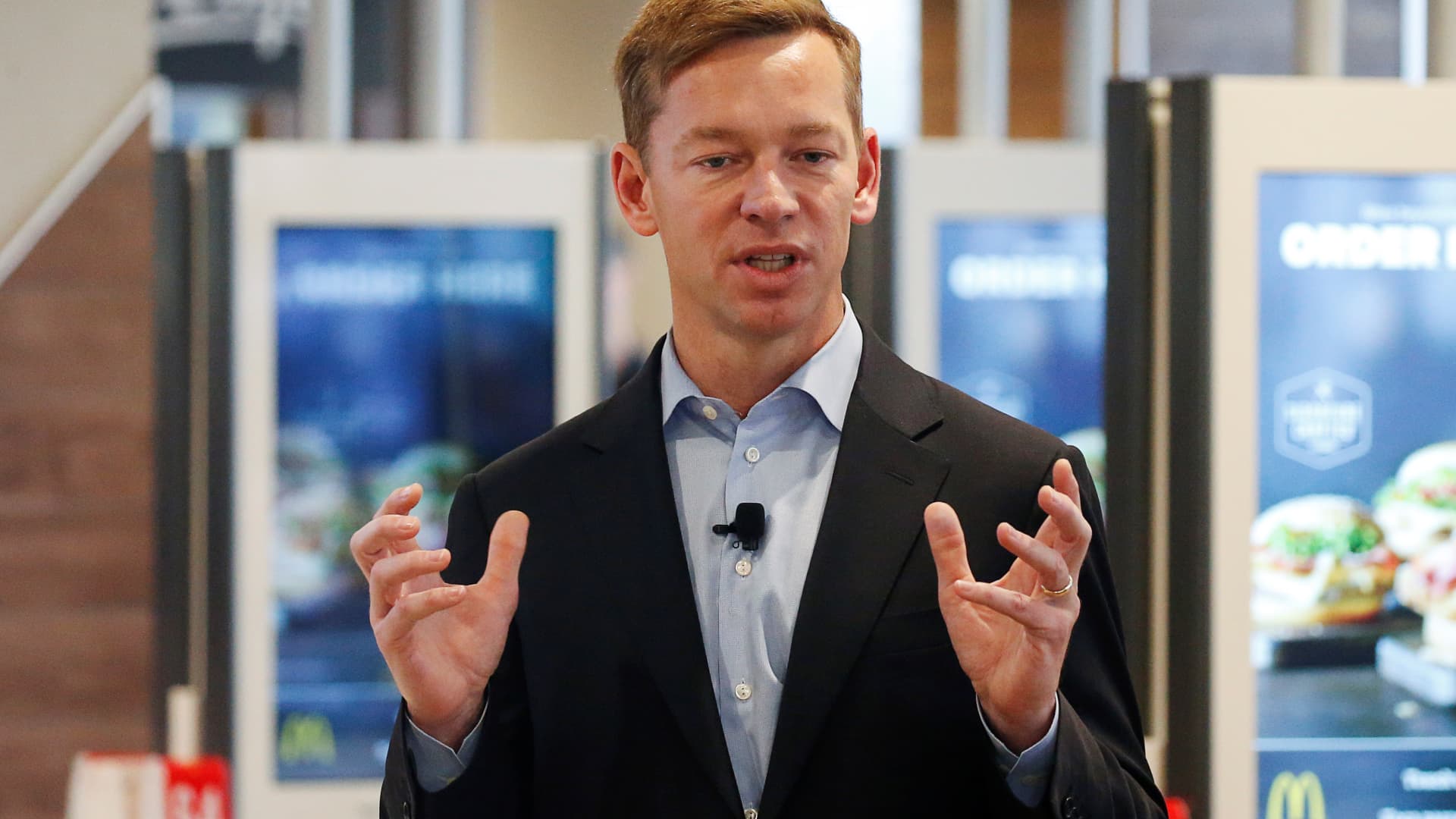
McDonald's CEO Chris Kempczinski has signaled that the restaurant industry faces a prolonged period of headwinds from persistent inflation and stagnant customer traffic. His comments reflect a broader reality across the quick-service and casual dining sectors, where both cost pressures and consumer behavior shifts are reshaping profitability.
Kempczinski's outlook matters because McDonald's, as the world's largest restaurant chain by revenue, operates as a bellwether for the entire sector. With nearly 40,000 locations globally and annual revenues exceeding $23 billion, the company's performance and leadership commentary shape investor expectations for competing operators like Yum Brands (YUM), Restaurant Brands International (QSR), and Chipotle Mexican Grill (CMG).
The inflation challenge persists across multiple fronts. Labor costs remain elevated following pandemic-era wage pressures, particularly as workers demand higher starting salaries. Commodity prices, while off their 2022 peaks, continue to exceed pre-pandemic baselines for beef, chicken, wheat, and cooking oils. Utilities and packaging add further cost layers that restaurants struggle to pass fully to consumers without triggering demand destruction.
Traffic flatness signals a consumer retrenchment. After stimulus-driven spending boosts in 2021 and 2022, household purchasing power has contracted in real terms. Higher interest rates have cooled discretionary spending, particularly among lower and middle-income consumers who comprise the core demographic for quick-service restaurants. Middle-income households, historically McDonald's largest customer base, have tightened spending on eating out as they redirect funds toward housing costs, childcare, and debt servicing.
Kempczinski's candor suggests McDonald's does not expect near-term relief. This contrasts with prior management commentary suggesting inflation would prove "transitory." The shift to a more pessimistic stance carries weight for several reasons. First, it influences capital allocation decisions. Operators facing prolonged margin pressure may slow expansion, defer remodeling investments, and cut back on technology rollouts. Second, it affects franchise partner confidence. Roughly 93 percent of McDonald's restaurants operate under franchise agreements, meaning thousands of independent owners depend on corporate guidance to plan operations and investment.
The company's response will likely involve menu engineering, promotional strategy shifts, and operational efficiency gains. McDonald's has historically proven adept at navigating inflationary cycles through product mix adjustments and selective price increases. Yet Kempczinski's tone suggests the current environment differs from prior episodes. The combination of persistent inflation plus weak traffic creates a profit margin squeeze that pricing alone cannot solve.
For investors, the commentary raises questions about same-store sales growth sustainability across the industry. Flat traffic means any revenue gains must come from higher prices. However, aggressive pricing risks accelerating traffic declines further, particularly as discount competitors like Wendy's and value-focused operators gain relative market share. Franchisees operating on 6 to 8 percent net margins face existential pressure if both costs and customer visits remain depressed.
Kempczinski's warning likely presages moderated earnings guidance and more conservative outlooks across the restaurant equity complex heading into 2024 and 2025. Operators that manage to expand margins despite flat traffic will outperform those that cannot.
Investors tracking McDonald's (MCD), Yum Brands (YUM), Restaurant Brands (QSR), Chipotle (CMG), and the Nasdaq Restaurant Index should monitor next quarter's same-store sales comparisons and franchise profitability metrics for evidence of whether traffic stabilization accelerates or continues deteriorating.