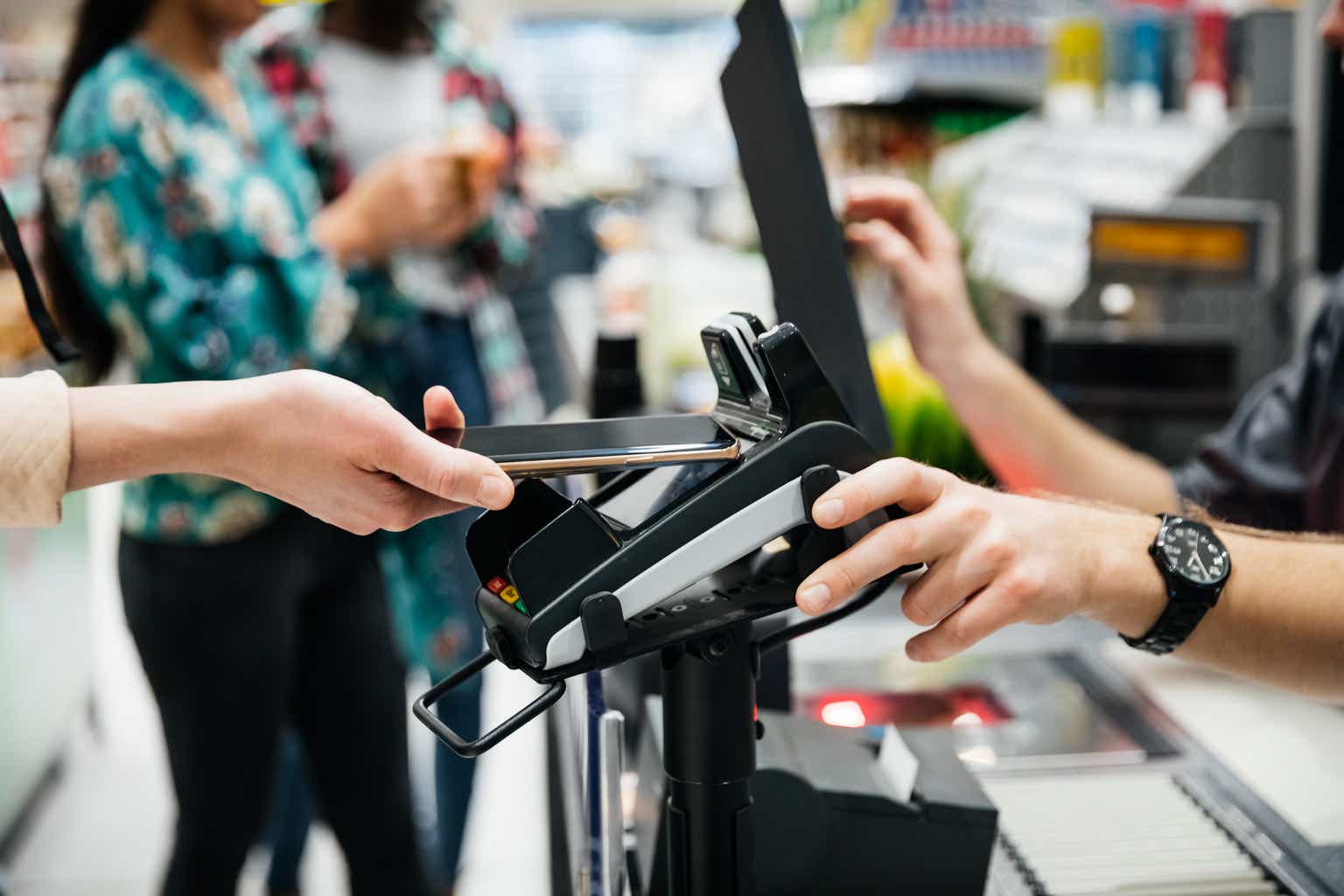
PayPal Holdings (PYPL) trades on dual narratives. The fintech giant generates reliable cash flows and operates a growing payments network, creating a buyout-worthy asset even at current valuations. Yet management has consistently communicated confidence in standalone value creation, signaling comfort with or without a strategic acquisition.
The company's core business remains resilient. PayPal processes over $300 billion in annual transaction volume across its platform, serving 435 million active accounts globally. Operating margins have stabilized after years of cost cuts, and free cash flow generation supports both dividends and share buybacks. For a potential acquirer, these metrics represent tangible, recurring revenue streams in a fragmented payments landscape where consolidation commands premium valuations.
The stock reflects this duality. PYPL trades at roughly 20 times forward earnings, a discount to fintech peers but elevated relative to historical averages. This valuation anchors potential bid scenarios. A controlling buyer would need to offer 30 to 40 percent premium to today's price to justify deal risk and integration costs, putting entry into the $70 to $85 range depending on final price discovery.
But PayPal leadership has signaled that organic growth and operational efficiency remain the priority. CEO Dan Schulman has emphasized strategic partnerships, expansion in emerging markets, and improvements to merchant economics. The company's investment in Zettle, its point-of-sale platform, and continued development of its Buy Now Pay Later capabilities position management to execute independently.
This flexibility works in shareholders' favor. If a bidder emerges, the company holds negotiating leverage backed by a sustainable business. If PayPal remains independent, investors gain exposure to a payments infrastructure play benefiting from secular digital commerce growth and cross-border transaction expansion. Either path generates value.
The immediate catalyst chain matters less than the fundamental shift. PayPal no longer trades like a distressed asset requiring emergency solutions. It operates as an incumbent with optionality. Market participants watch for activist involvement, activist Starboard Value holding a stake and maintaining pressure on capital allocation decisions. Activist ownership can trigger formal sale processes or force strategic pivots, though neither outcome appears imminent.
PYPL holders should monitor quarterly results for revenue growth acceleration, margin expansion, and free cash flow conversion. Management commentary on M&A appetite and strategic positioning will signal conviction in standalone value or openness to transformative transactions.