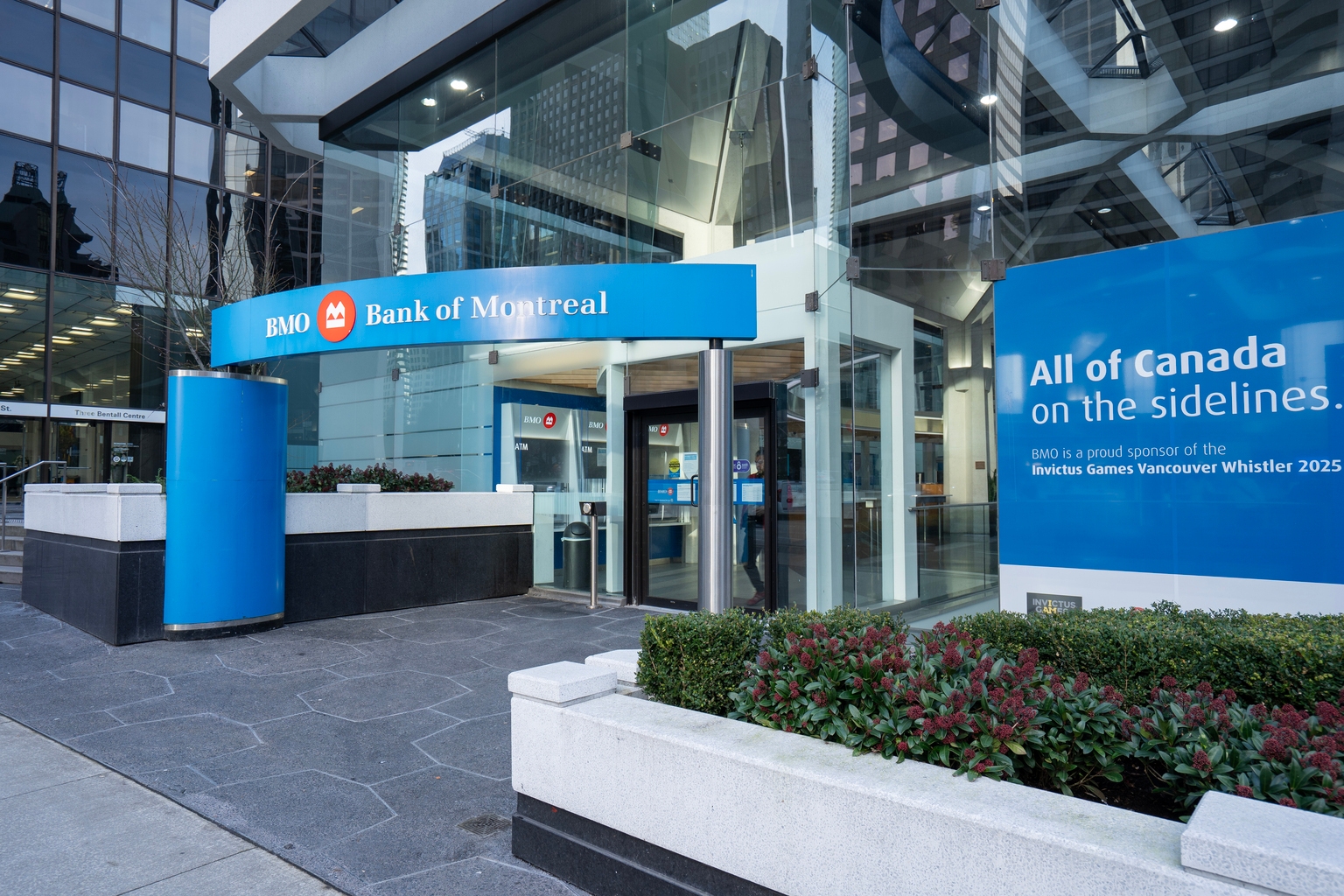
Bank of Montreal reported medium-term profitability targets that analysts say are already reflected in current valuations, leaving limited upside for equity investors at current price levels.
The bank outlined return on equity (ROE) goals and earnings growth projections through the mid-2020s as part of its strategic guidance. These targets focus on improving operating efficiency and expanding revenue streams across retail and commercial banking divisions. However, market participants view the announcement as incremental rather than transformative.
Analysts point to BMO's valuation multiples relative to peers. The stock trades near historical averages for Canadian big-five banks, suggesting the market has already priced in management's profitability roadmap. The bank's guidance does not meaningfully exceed consensus expectations among institutional investors tracking the name.
BMO faces headwinds from a tightening competitive landscape in Canadian banking. Interest rate volatility affects net interest margins. Loan loss provisions remain a consideration given economic uncertainty. The bank's U.S. expansion strategy through subsidiaries adds execution risk that could impact near-term returns.
Operating leverage from digital banking investments and automation initiatives forms part of the profitability thesis. Cost-to-income ratio improvements underpin the ROE targets. Yet achieving these efficiency gains requires sustained technology spending and workforce restructuring, both of which carry execution risks.
The guidance leans on stable economic conditions in Canada and the United States. Recession scenarios would pressure asset quality and credit demand. Rate cuts, if sustained, would compress net interest margins further.
BMO competes directly with Royal Bank of Canada (RY), Toronto-Dominion Bank (TD), Scotiabank (BNS), and Canadian Imperial Bank of Commerce (CM) for market share. Each competitor has announced similar efficiency initiatives. The crowded landscape limits BMO's ability to surprise on profitability gains.
Institutional investors scrutinized the announcement for guidance revisions upward or new strategic initiatives. Neither materialized. Management's medium-term targets align with existing analyst models, pricing in limited room for positive surprises.
The takeaway for equity holders: BMO stock may offer steady dividend yields and modest capital appreciation aligned with economic growth. But the profitability roadmap offers no compelling catalyst for outperformance relative to Canadian banking peers or broader equity indices.
Watch BMO stock price action against TD, RY, and CM, alongside Canadian economic data and Bank of Canada policy signals, to assess whether valuation compression occurs or if the stock grinds sideways with dividend support.