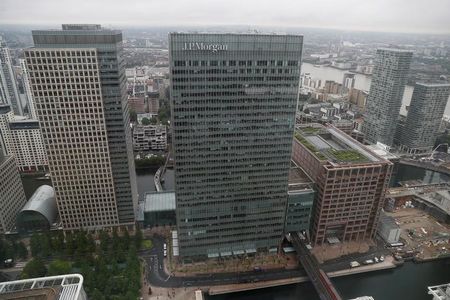
JPMorgan Chase has restricted its Hong Kong employees from accessing Anthropic's AI tools, according to reporting from the Financial Times. The bank cites data security and regulatory concerns as the primary reason for the limitation.
The move reflects growing tension between major financial institutions and emerging AI providers over data handling in geopolitically sensitive jurisdictions. Hong Kong operates under a unique regulatory framework following the 2020 national security law, which has created compliance complexity for multinational firms managing operations there.
JPMorgan's decision signals how banks are tightening controls over third-party AI access in regions where data sovereignty rules remain fluid. The institution joins other financial players reassessing their use of external AI platforms in light of heightened scrutiny from regulators in the United States and Asia.
Anthropic, the AI startup backed by Google and others, has built Claude into a competitive alternative to OpenAI's ChatGPT. The company markets itself to enterprise clients across financial services. However, restrictions like JPMorgan's placement may slow adoption in key markets where banks manage substantial client assets and sensitive trading data.
The Hong Kong restriction does not block JPMorgan entirely from using AI tools. The bank continues developing its own internal AI capabilities and maintains relationships with other AI providers. The decision specifically targets Anthropic's public-facing tools, which staff could access outside controlled environments.
Regulators in Hong Kong and mainland China have grown increasingly focused on how financial institutions handle customer data and intellectual property. JPMorgan's move preempts potential regulatory friction and demonstrates the bank's commitment to compliance in a region where enforcement remains unpredictable.
The incident underscores a wider pattern in fintech and financial services. Banks face pressure to innovate with cutting-edge AI while simultaneously protecting client information from exposure in jurisdictions with unclear data governance rules. This balance has become harder as generative AI tools proliferate and staff expect access to consumer-grade applications at work.
JPMorgan and Anthropic have not commented publicly on the restriction. The bank's move may prompt other financial institutions to review their own AI policies in Hong Kong and Asia more broadly. If major banks tighten access to third-party AI tools across the region, adoption curves for companies like Anthropic could flatten in one of the world's most important financial centers.